How to Choose A Softball Bat: A Softball Bat Size Guide
Choosing the right softball bat can make all the difference in your swing, comfort, and performance at the plate. With so many options available, it’s easy to feel overwhelmed. That’s why we’ve put together this softball bat buying guide — to help players (and parents) understand how to find the perfect fit.
Whether you’re a beginner or a seasoned player, this softball bat size guide will walk you through the key factors: bat length, weight, material, and league regulations. By the end, you’ll know exactly how to choose a softball bat that suits your game.
Why the Right Softball Bat Matters
A bat isn’t just another piece of equipment — it’s the tool that connects all your hard work in practice to results on the field. The right bat can help you:
- Generate more power and bat speed
- Improve control and consistency
- Reduce risk of injury from using the wrong size or weight
- Boost confidence every time you step into the batter’s box
Step 1: Choose the Correct Bat Length
Length is one of the most important factors when selecting a softball bat. A bat that’s too short limits your plate coverage, while one that’s too long can slow down your swing.
Softball Bat Length Guide by Height & Weight
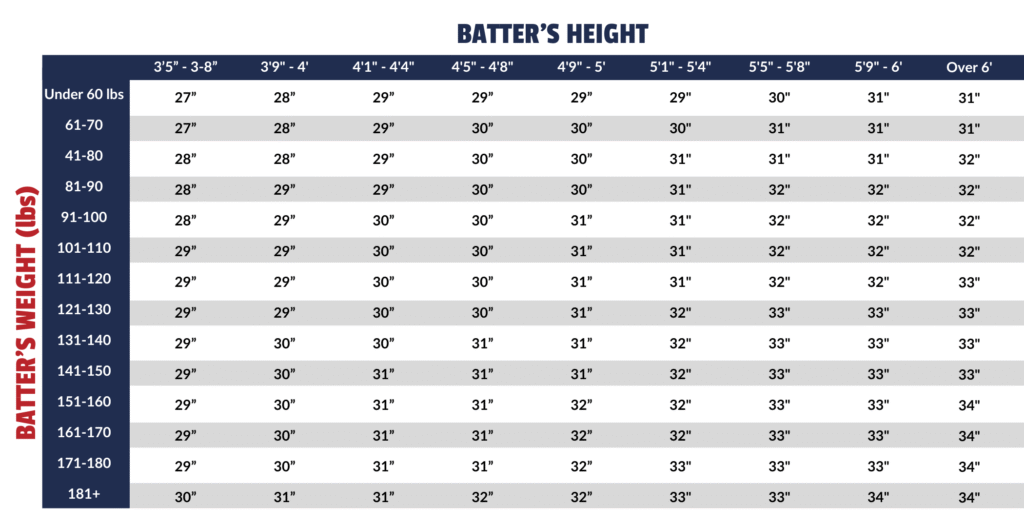
Pro Tip: To quickly test the right bat length, hold the bat straight down by your side. The end should touch the ground without forcing you to lean or stretch.
If you don’t have access to player’s height and weight, here are commonly used bat lengths by age.
Softball Bat Length by Age

Pro Tip: The charts above should be used solely as a guide – Ultimately, the right bat length will come down to your preference and other determining factors, such as skill level, strength and others.
Step 2: Find the Right Bat Weight
Bat weight is measured in ounces and paired with the bat’s length to calculate its drop weight (length in inches minus weight in ounces). For example, a 32” bat that weighs 22 ounces is a -10 bat.
General Guidelines:
- Lighter bats (-11 to -13): Best for younger players or those who need faster swing speed.
- Balanced bats (-8 to -10): A good middle ground for teens and adult rec players.
- Heavier bats (-5 to -8): For experienced hitters looking for maximum power.
Test It: Hold the bat with one hand straight out for 20 seconds. If your arm struggles, the bat may be too heavy.
Step 3: Pick the Right Material
Aluminium/Alloy bats
- Durable and long-lasting
- Usually ready to use right away (no break-in)
- Lighter swing weight for faster swings
Composite Bats
- Larger sweet spot and much more pop
- Reduce vibration for a smoother feel
- Require a break-in period but offer top performance once ready
Step 4: Understand League Regulations
Before purchasing, always check your league’s bat rules. Different leagues require specific certifications:
- USA Softball (ASA) – Fastpitch and some slowpitch leagues
- USSSA – Competitive travel and tournament play
- NSA & ISA – Some slowpitch leagues
- High School/College – NFHS or NCAA approved
Using an illegal bat can result in penalties or disqualification, so make sure your bat carries the correct stamp.
Step 5: Balance vs. End-Loaded
- Balanced Bats: Weight is evenly distributed. Great for contact hitters who value control and bat speed.
- End-Loaded Bats: More weight in the barrel. Favored by power hitters looking to maximize distance.
Final Thoughts
Knowing how to choose a softball bat comes down to finding the right combination of length, weight, material, and balance for your game. A properly fitted bat not only improves your performance but also helps you feel confident at the plate.
If you’re unsure, use this softball bat size guide as a starting point, and don’t hesitate to try out different bats before making your final decision.
⚾ Ready to swing with confidence? Browse our full range of softball bats here.